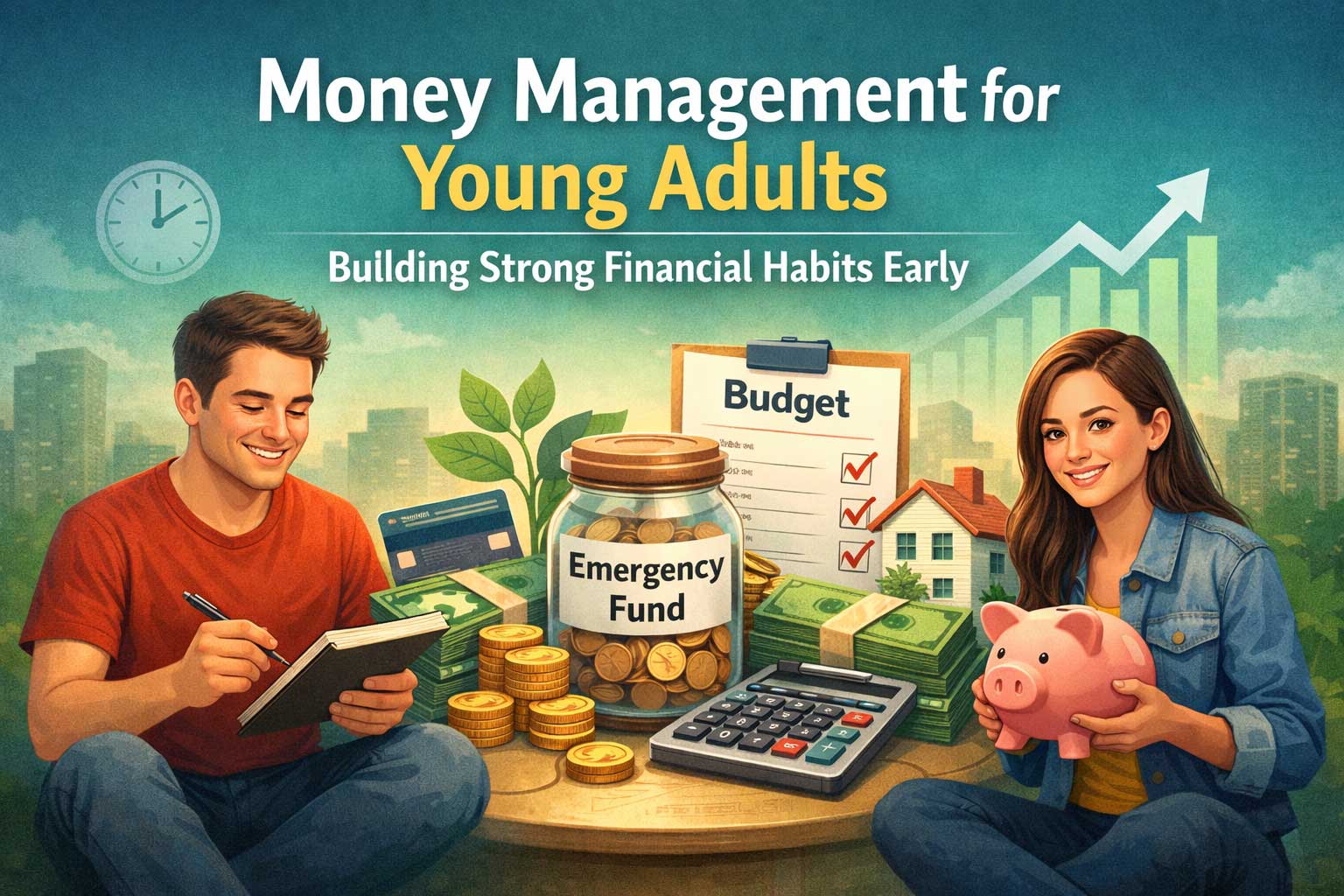
Money management for young adults isn’t about becoming “perfect” with money. It’s about building a few strong habits that work even when life gets messy—when your income changes, rent jumps, friends invite you out, or your car breaks down at the worst possible time.
Your 20s (and early 30s) are one of the most powerful financial windows you’ll ever have—not because you’ll automatically earn more, but because habits compound. The way you handle money early can shape your stress levels, career choices, relationships, and the freedom you’ll have later.
This guide is a deep, practical roadmap to help you build a real money system: one that supports your goals, protects you from surprises, and grows with you.
Why Money Habits Early Matter More Than You Think
1) Money is a skill, not a personality trait
Some people act like you’re either “good with money” or you’re not. That’s nonsense. Money management is a set of skills: planning, tracking, decision-making, self-control, negotiation, and automation.
Skills can be learned.
2) Your financial choices shape your options
Money isn’t just numbers. It’s freedom to:
- Leave a toxic job
- Move to a better city
- Handle emergencies without panic
- Take career risks (starting a business, switching industries)
- Help family if needed
- Say yes to opportunities
3) Compounding rewards consistency, not perfection
Most people think compounding is only about investing. But habits compound too:
- Budgeting reduces waste → savings grow → stress drops → decisions improve
- Building credit early reduces borrowing costs → more money stays with you
- Avoiding high-interest debt early prevents years of financial drag
The Foundation: Your “Money Operating System”
Before tactics, you need a simple system you can run every month. Think of it like a routine that keeps your finances stable even when life changes.
A strong money system has five parts:
- Clarity: Know what’s coming in and going out
- Control: Spend intentionally, not accidentally
- Protection: Emergency fund + insurance + fraud prevention
- Progress: Debt payoff and investing
- Automation: Remove willpower from the equation
If you build these five, your finances will improve even if you’re not a “finance person.”
Step 1: Know Your Real Starting Point (Without Stress)
A lot of young adults avoid looking at their finances because it feels overwhelming or embarrassing. But the goal isn’t judgment—it’s information.
Do a 30-minute financial snapshot
Write down:
- Monthly take-home pay (after taxes)
- Current savings
- Current debts (credit cards, student loans, personal loans, buy-now-pay-later)
- Minimum monthly payments
- Fixed bills (rent, utilities, phone, insurance, subscriptions)
- Variable spending (food, transport, shopping, fun)
You are not “behind.” You are simply collecting data.
Calculate your baseline
Two key numbers:
- Monthly essentials: rent + groceries + transport + basic bills + minimum debt payments
- Monthly flex: everything else
This tells you your “survival number” and how much room you have to build goals.
Step 2: Build a Budget You’ll Actually Use
Most budgets fail because they’re too strict or too complicated. The best budget is the one you’ll follow when you’re tired, busy, and tempted.
The 3-level budgeting approach (easy → advanced)
Level 1: The “Guardrails Budget” (best for beginners)
Set spending guardrails instead of tracking every purchase.
- Essentials cap (needs)
- Lifestyle cap (wants)
- Savings/debt cap (future)
Example guardrails:
- Needs: up to 60%
- Wants: up to 25%
- Savings/debt: at least 15%
If your life is expensive right now, start where you are. Even 5% saved is a win because it builds the habit.
Level 2: The “Category Budget” (most common)
Assign monthly amounts to categories:
- Rent
- Utilities
- Groceries
- Transport
- Debt payments
- Savings
- Eating out
- Fun
- Personal care
- Gifts
- Miscellaneous
Track weekly, not daily. Daily tracking burns people out.
Level 3: The “Zero-Based Budget” (best for fast progress)
Every dollar gets a job: spend, save, invest, or pay debt.
This is powerful if you’re focused on big goals, but it requires more attention.
A realistic budget example (young adult scenario)
Let’s say take-home pay is 1,800 per month.
Needs (1,050)
- Rent + utilities: 700
- Groceries: 220
- Transport: 80
- Phone: 30
- Basic insurance: 20
Debt & savings (360)
- Emergency fund: 150
- Student loan minimum: 120
- Extra debt payoff: 90
Wants (390)
- Eating out / coffee: 120
- Entertainment: 80
- Personal care: 60
- Shopping: 80
- Subscriptions: 50
This budget isn’t “tight” because it’s miserable. It’s tight because it’s intentional.
The secret to budgeting success: a weekly money check-in
Pick one day each week (same day every week):
- Check account balances
- Review spending for the last 7 days
- Adjust categories
- Plan upcoming expenses (events, travel, gifts)
This is what keeps you in control without obsession.
Step 3: Separate Your Money Into Simple Buckets
Young adults often struggle because all money sits in one account, and everything competes:
rent vs. food vs. fun vs. savings.
A bucket system removes confusion.
A clean 3-account structure
- Bills Account: rent, utilities, loan payments, insurance, subscriptions
- Spending Account: food, transport, fun, daily life
- Savings/Goals Account: emergency fund, future goals, big purchases
If you can’t open multiple accounts, you can mimic this by using categories in your budgeting method. But separating accounts makes discipline easier.
Automate your buckets
On payday:
- A fixed amount moves to Bills
- A fixed amount moves to Savings
- The rest is Spending
Automation turns “good intentions” into a system.
Step 4: Build an Emergency Fund (Your Stress-Reduction Machine)
An emergency fund is not optional. It’s the difference between a bad week and a financial disaster.
What counts as an emergency?
- Medical bills
- Job loss or reduced hours
- Car repair needed to get to work
- Urgent travel for family
- Essential home repair
What doesn’t count:
- Concert tickets
- Shopping sale
- Vacation
- New phone because yours is “old” (unless it’s required for work and truly broken)
How much should young adults save?
Start with a Starter Emergency Fund:
- Goal: 300 to 1,000 (depending on your expenses)
Then build to:
- 1 month of essentials
- 3 months of essentials (strong target for most)
- 6 months (ideal if your income is unstable or you have dependents)
If you’re paying high-interest debt, you don’t need a huge emergency fund first—build a starter fund, then focus on debt, then rebuild.
How to grow it without pain
- Save a small fixed amount weekly (even 10–25)
- Save “found money” (refunds, gifts, bonuses)
- Round-up strategy: keep your spending account slightly lower and sweep leftovers monthly
- Make it inconvenient to touch (separate account)
Your emergency fund is your financial seatbelt.
Step 5: Understand Credit (So It Doesn’t Control You)
Credit can either lower your costs and open opportunities, or quietly drain you through interest and fees.
What credit is really used for
- Renting an apartment
- Getting better insurance rates in some places
- Financing a car (sometimes)
- Qualifying for certain jobs (in some regions/industries)
- Accessing favorable interest rates
The golden rule of credit cards
If you use a credit card, pay the full statement balance every month.
Not the minimum. Not “most of it.” The full statement balance.
If you can’t reliably do that yet, use debit or a secured card while building habits.
Common credit mistakes young adults make
- Paying only minimum payments
- Carrying a balance “just this month” and repeating it
- Maxing out the card (high utilization hurts your score and raises risk)
- Applying for too many cards too quickly
- Using credit for lifestyle upgrades before income supports it
A simple credit-building approach
- Use 1 card
- Put 1–3 small recurring expenses on it
- Pay the full statement balance automatically
- Keep utilization low (ideally under 30%, even better under 10%)
Credit should be boring. Boring is good.
Step 6: Crush High-Interest Debt Without Destroying Your Life
Debt is not “moral failure.” It’s math + behavior + life circumstances. But high-interest debt is a priority because it blocks progress.
Know your debt type
- High-interest debt: credit cards, payday loans, many personal loans
- Moderate: some personal loans, some car loans
- Lower-interest: many student loans, some mortgages
Focus aggressive payoff on the high-interest ones first.
Two popular payoff strategies
1) Avalanche method (best mathematically)
Pay extra on the highest interest rate first while paying minimums on others.
2) Snowball method (best psychologically)
Pay extra on the smallest balance first to get quick wins and momentum.
Pick the one you’ll stick to. Consistency wins.
A debt payoff mini-plan that works for young adults
- Stop adding new debt
- Build a starter emergency fund (so you don’t swipe for emergencies)
- Choose avalanche or snowball
- Automate minimum payments
- Automate extra payoff amount
- Increase payoff amount every time income rises
How to stop debt from coming back
Debt is often a symptom of:
- No emergency fund
- No spending plan
- Impulse buying triggers
- Lifestyle inflation
- Under-earning (income problem, not just spending problem)
A real solution addresses the cause, not just the balance.
Step 7: Start Investing Early (Even Small Amounts Matter)
Investing is how young adults turn time into wealth. The biggest advantage you have is years.
Investing basics in plain language
- Saving protects money you’ll need soon
- Investing grows money you won’t need for years
- Investing comes with ups and downs, but time smooths volatility
When to start investing
A strong order of priorities:
- Pay essentials
- Build starter emergency fund
- Pay off high-interest debt
- Invest consistently (while still building emergency fund to 3 months)
If you’re debt-free and stable, you can invest more aggressively.
How much should a young adult invest?
Start with something sustainable:
- 1% of income → then 3% → then 5% → then 10%+ as income grows
The real “secret” is increasing contributions over time.
The habit that matters most: automatic investing
Automation removes emotion and procrastination. When investing is automatic, you benefit from consistency.
Avoid common young adult investing traps
- Trying to get rich quickly
- Chasing hype or rumors
- Constantly switching strategies
- Investing money needed within a year
- Ignoring fees and risk
A calm, consistent approach beats drama.
Step 8: Control Lifestyle Inflation (The Silent Budget Killer)
Lifestyle inflation happens when spending rises with income—and saving never improves.
You get a raise, and suddenly:
- More food delivery
- Better apartment
- More subscriptions
- More “treat yourself” purchases
- More travel
- Higher car payment
None of these are “bad.” The problem is when upgrades happen automatically without intention.
The 50% rule for raises (simple and powerful)
Every time income increases:
- Use 50% for your future (debt payoff, savings, investing)
- Use 50% for your lifestyle
This lets you enjoy life now and build wealth.
Spend on what you love, cut what you don’t
A strong money habit isn’t “spend less on everything.”
It’s:
- Spend intentionally on your top priorities
- Reduce waste everywhere else
That feels better and is easier to maintain.
Step 9: Master Smart Spending (Without Feeling Deprived)
Smart spending is not about never having fun. It’s about getting the most happiness per dollar.
The “Big 3” expenses to optimize first
These have the biggest impact:
- Housing
- Transportation
- Food
If you improve these, you can enjoy smaller splurges guilt-free.
Housing tips for young adults
- Avoid locking yourself into rent that forces you into debt
- Consider roommates if it massively improves savings
- Don’t over-upgrade early in your career
- Factor utilities and commuting costs into rent decisions
Transportation tips
- A car is not just a payment: it’s fuel, repairs, insurance, parking
- If you buy a car, keep total car costs reasonable relative to income
- Avoid stretching payments just to afford a “nicer” car
Food spending that doesn’t ruin your life
- Learn a few cheap, high-protein meals you genuinely like
- Create a “default grocery list” and repeat it
- Plan 2–3 easy meals you can always cook
- Keep eating out as a planned category, not a surprise
Kill subscription creep
Subscriptions feel small but add up fast.
Do a monthly audit:
- Keep the ones you truly use
- Cancel the rest
- Consider rotating entertainment subscriptions monthly
Step 10: Build Financial Protection (Insurance, Identity, and Safety)
Most young adults think protection is boring—until something happens.
Basic insurance to understand early
Depending on your situation, consider:
- Health coverage (critical)
- Renter’s insurance (often affordable and protects your stuff)
- Auto insurance (if you drive)
- Disability coverage (if your income depends on your ability to work)
The goal is not fear—it’s reducing catastrophic risk.
Identity protection habits
- Use strong, unique passwords
- Enable two-factor authentication
- Review bank and card activity weekly
- Be cautious with public Wi-Fi and shared devices
- Don’t share personal info casually
Avoid money scams that target young adults
Common red flags:
- “Guaranteed” returns
- Urgent pressure to act now
- Requests for private codes or verification
- “You’ve won” messages requiring fees
- Job offers that require you to “move money” for them
If it feels rushed or too good to be true, slow down.
Step 11: Set Goals That Make You Excited to Save
Saving is easier when it’s tied to a life you actually want.
Use the 3-goal framework
- Short-term goal (0–12 months): emergency fund, pay off card, travel fund
- Mid-term goal (1–5 years): car upgrade, moving, education, business launch
- Long-term goal (5+ years): home, financial independence, family security
Turn goals into monthly numbers
Example:
- Goal: 1,200 travel fund in 8 months
- Monthly savings needed: 150
Now it’s actionable.
Visual motivation works
A simple tracker (even on paper) can boost consistency:
- Savings thermometer
- Monthly checkmarks
- Progress bar
Motivation isn’t childish. It’s effective.
Step 12: Learn the Money Skills Most People Skip
Negotiation (raises, rent, bills)
Negotiation is one of the highest-return financial skills.
Practice:
- Asking for better pay
- Requesting lower fees
- Comparing service plans
- Negotiating subscriptions or contracts
Even small improvements add up.
Career income strategy (big impact)
For young adults, income growth often matters more than extreme frugality.
A simple approach:
- Build 1–2 high-value skills
- Document results at work
- Ask for raises with evidence
- Apply strategically for better roles
- Keep learning consistently
The best budget is easier with a better income.
Basic taxes and paperwork (reduce future stress)
Even if you don’t love it, learn:
- What you owe and why
- The difference between gross vs. net pay
- How to keep records for side income
- Deadlines that matter
Avoiding paperwork can cost you money.
A Simple “Money Routine” You Can Copy
Weekly (15–20 minutes)
- Check balances
- Review last 7 days spending
- Adjust upcoming week plan
Monthly (45–60 minutes)
- Pay/confirm bills
- Track net worth (assets minus debts)
- Review debt payoff progress
- Review savings and investing contributions
- Plan for irregular expenses (birthdays, travel, annual bills)
Quarterly (60 minutes)
- Audit subscriptions
- Check credit report and card usage
- Revisit goals
- Adjust your budget based on lifestyle changes
A routine makes money management feel normal—not stressful.
The 30-Day Money Reset Plan for Young Adults
If you want a clear path to start immediately, follow this.
Week 1: Get clarity
- List income, bills, debts, minimum payments
- Choose your budgeting style (guardrails, category, or zero-based)
- Pick a weekly money check-in day
Week 2: Create buckets + automation
- Set up separate accounts or categories
- Automate bills and minimum payments
- Automate a small weekly savings amount
Week 3: Build starter emergency fund
- Aim for 300–1,000
- Cut 1–2 easy expenses temporarily (not forever)
- Put “found money” into the fund
Week 4: Start progress mode
- Choose debt payoff strategy
- Set a monthly extra payment amount
- If debt is under control, start small automatic investing
You’re not trying to solve your entire financial life in 30 days. You’re building a system that runs.
Common Young Adult Money Questions (And Real Answers)
“I don’t make enough to save. What should I do?”
Start tiny. Saving is partly about building identity and consistency.
- Save 5 per week if that’s what you can do
- Build the habit
- Focus on income growth alongside budgeting
- Cut high-impact waste (subscriptions, impulse spending, expensive commuting)
Even small savings can prevent debt later.
“Should I focus on debt or investing first?”
In most cases:
- If it’s high-interest debt, prioritize paying it down after a starter emergency fund
- If debt is low-interest and stable, you can often invest while paying it down
The right answer depends on rates, stability, and behavior.
“How do I stop impulse spending?”
Use a system:
- 24-hour rule for non-essential purchases
- Remove saved payment info from shopping apps
- Use a weekly fun budget (so you don’t feel deprived)
- Identify triggers (stress, boredom, social pressure)
Impulse spending is often emotional. Build friction and healthier alternatives.
“How do I manage money when friends spend more than me?”
You don’t need to match their lifestyle.
Try:
- Suggest cheaper activities
- Set a monthly “social budget” and stick to it
- Be honest with yourself: short-term image isn’t worth long-term stress
“What’s the single best money habit?”
A weekly check-in + automation.
- Weekly check-in keeps you aware
- Automation ensures progress even when motivation drops
Mistakes to Avoid in Your 20s and Early 30s
- Ignoring money until it becomes a crisis
- Using debt to fund a lifestyle your income doesn’t support
- Skipping emergency savings
- Not learning credit basics early
- Lifestyle inflation with every raise
- Not tracking where money is actually going
- Trying to get rich quickly instead of building consistent habits
- Avoiding financial conversations (with yourself, partners, or family)
- Buying expensive status items too early
- Not investing at all because it feels confusing
Avoiding these doesn’t require perfection—just awareness and a plan.
A Balanced Money Mindset for Young Adults
Money management should support your life, not consume it.
A healthy approach looks like:
- You enjoy life now, within your plan
- You prepare for emergencies without fear
- You build for the future automatically
- You make financial decisions based on priorities, not pressure
- You keep improving without shame
The goal isn’t to become obsessed with money. The goal is to stop money from controlling you.
Practical Checklists You Can Use Today
Starter checklist: Build stability
- Track income and fixed bills
- Choose a budgeting method
- Set up weekly check-in
- Create 3 money buckets
- Automate bills and minimum payments
- Save starter emergency fund (300–1,000)
Growth checklist: Build progress
- Pay off high-interest debt
- Increase emergency fund to 1–3 months
- Start automatic investing (even small)
- Increase savings rate when income rises
- Audit subscriptions monthly
- Set and fund 3 goals (short, mid, long)
Protection checklist: Reduce risk
- Basic insurance coverage in place
- Strong passwords + two-factor authentication
- Weekly account monitoring
- Credit usage kept manageable
- Scam awareness habits
Conclusion: Your Future Self Will Thank You
Money management for young adults is not about having a perfect spreadsheet or never spending on fun. It’s about creating a stable foundation and strong habits early—habits that keep working whether you’re earning a little or a lot.
Start simple:
- Build clarity with a weekly check-in
- Use buckets to reduce confusion
- Save a starter emergency fund
- Handle credit with discipline
- Pay down high-interest debt
- Invest consistently and automatically
- Keep lifestyle upgrades intentional
If you do these things—even imperfectly—you’ll build financial confidence, reduce stress, and give yourself options most people only wish they had.
The best time to build strong financial habits was years ago. The second best time is today.