The New Frontier of Living: Why Less is More in the Modern Home
In the heart of Tokyo, a family of five resides in a space that would make the average suburbanite claustrophobic: a 57-square-meter (613 sq. ft.) open-air home. Yet, for Jajiro, an artist and architect who lives there with his wife and three children, the small footprint is not a sacrifice—it is a deliberate lifestyle choice that reflects a growing global trend in urban living.
The Architecture of Connection
Modern residential design is increasingly shifting away from sprawling floor plans toward spaces that prioritize human connection. Jajiro notes that the compact nature of his home allows him to “always feel” the presence of his family, hearing his wife and children talking and laughing regardless of where they are in the house. This philosophy of proximity suggests that smaller spaces can actually strengthen familial bonds by removing the physical barriers that large houses often create.
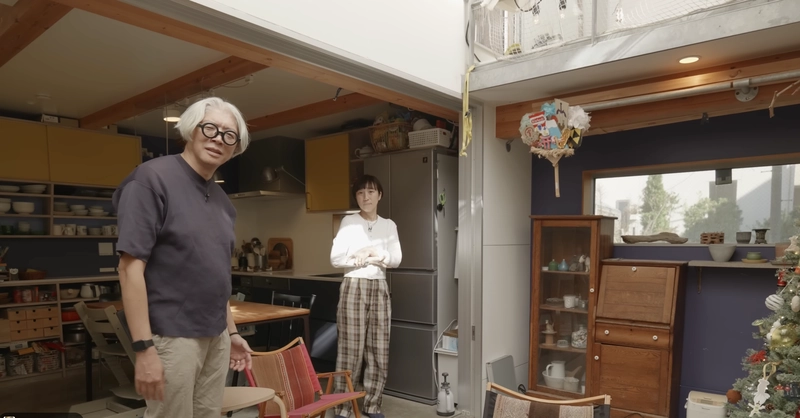
To maximize this connection, the home utilizes an open-air concept. The living room, for instance, has no roof, effectively blurring the line between the interior and the sky. By using the same color palette for both inside and outside areas, the family perceives the entire footprint as a single, continuous space. “Just using your sky… is something universal,” Jajiro explains, suggesting that this design ethos could be applied anywhere from Tokyo to New York.
Multi-Functional Innovation
When square footage is at a premium, every object must justify its existence. In Jajiro’s home, functionality is layered. The staircase doubles as a shelving unit, which in turn acts as a ladder for the children to reach their sleeping quarters. This “ladder-shelf” hybrid is a hallmark of “Never Too Small” design—a movement focused on sustainable, compact urban culture.
Other space-saving strategies include:
• Futons instead of beds: By using futons that can be stowed away, rooms remain flexible for different activities throughout the day.
• DIY Flexibility: Jajiro and his son built custom shelving and tables to ensure the rooms could be used for homework, play, or work as needed.
• Visual Storage: Rather than hiding everyday items, the family uses shoes and coats as decorative elements, integrated into the entrance design.
Designing for the Long Term
A common critique of small-space living is its perceived lack of longevity, particularly for growing families. However, Jajiro’s home, which he considers “version 5.4” after three years of continuous refinement, was designed with the future in mind. While the house is currently home to five, he views it as a perfect space for just two people once his children eventually move out.
“The time with your kid is not so long,” Jajiro observes, noting that many parents build oversized homes for their children that become vacant shells later in life. By focusing on a space that accommodates the family now but remains manageable for a couple for the next 30 to 40 years, the home represents a sustainable approach to the human lifecycle.
The Aesthetic of the “Strict” Interior
Living small does not mean living without style. Jajiro’s wife, an interior designer, maintains a “strict” eye on what enters the home to ensure the aesthetic remains cohesive. The home is filled with art and vibrant colors—specifically a palette of five colors that surprised the original painters—reflecting Jajiro’s own work as an artist. Even the furniture is sentimental; the family bought a new dining chair for every child born, turning their seating into a physical timeline of their growth.
As urban centers become more crowded, the lessons from this Tokyo “open-air” home offer a blueprint for the future. It suggests that by embracing minimalism, multi-functional design, and a connection to nature, we can create living spaces that feel expansive, regardless of their actual size.